
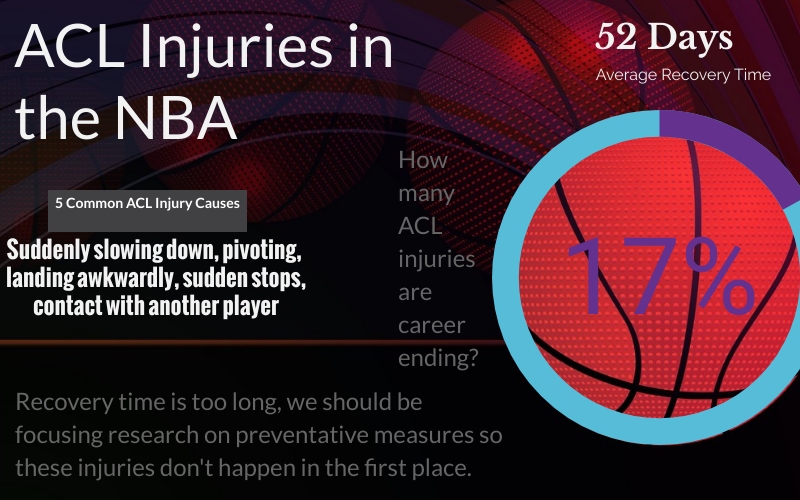
ACL Injuries
Dropping Acid begins with the author, Elizabeth Kolbert, visiting One Tree Island, a small patch of land at the southernmost end of the Great Barrier Reef. She arrives to a very bare bones research station with only two labs, some cabins, and an outhouse, and inside the cabins are small taglines inscribed on the wall from past research teams. She then talks about how even sixty years after the Great Barrier Reef was discovered by Captain James Cook in 1770, how they formed was still a complete mystery. That is, until Charles Darwin began to theorize about the subject in The Structure and Distribution of Coral Reefs in 1842, and even these theories weren’t wholly accepted until the 1950’s.

The way reefs form is through a process known as calcification, which is essentially the hardening of tissue to form a structure. Coral does this a little differently, though. They work as a group and calcify on top of one another, slowly building and forming a reef. They all grow within 30 degrees north and 30 degrees south of the equator. The Great Barrier Reef is the world’s largest reef, stretching more that 1,500 miles and at some points being more than 500 feet thick! This massive expanse of billions of tiny polyps, the name for an individual coral, provides an environment for hundreds of thousands of species. Sadly, scientists predict that coral reefs may become the first major ecosystem in the modern world to become extinct. Even though corals seem to be solid and hardy, researchers explain that if current trends continue until 2050, all you’ll be able to see are large piles of rubble that are rapidly eroding away.
Originally, Kolbert was supposed to stay on the larger island, known as Heron Island, that was close to One Tree. However, when she arrived at Heron, the plexiglass dome that would allow them to manipulate CO2 levels in the water wasn’t even close to being finished. Once she heard about the separate expedition to One Tree Island, it only took her three days to find a boat to take her there. The goal of the experiment on One Tree Island, was to measure the properties of water at various tides and compare it to the same data that Donald Kinsley collected in the 1970’s (Donald Kinsley was an Australian researcher who set up the site at One Tree). Kolbert made her first trip to collect samples at around 9 PM with the head-researcher, Ken Caldeira, who made special note to warn her about falling through the “pie crust,” which is what the researchers called the thin, brittle surface of the reef.

The first evidence that CO2 could affect coral reefs came from Arizona, in a place known as Biosphere 2. The results stated that corals grew best in water with an aragonite saturation state of 4 to 5, and current trends predict that by 2060, there won’t be a place that’s above 3.5. As these saturation states fall, the energy that’s needed to calcify will increase and there’ll be less calcification.
One of the cool things that Kolbert talks about is the “mass spawning” of coral, which happens every full moon. Under normal conditions, coral reproduce asexually by budding, a process in which a mother organism creates an exact copy of itself. According to Kolbert, on the big night, the coral develop what look like goosebumps, which are actually are actually the egg-sperm bundles bulging from the polyps. The bundles then burst, spilling out into the water around them, and fertilized each other, forming little, pink larvae.

The biggest point that jumped out to me is that coral reefs are actually going extinct. I thought that coral would be able to “survive” for a decent amount of time without building on itself, like a rock being eroded very slowly in water. Apparently, the opposite is true. The fact that by 2050 the coral reefs will be no more than piles of rubble is very frightening, because it’s not just the coral that’s affected. As Kolbert said above, hundreds of thousands of species call the reefs their home, what happens if their home disappears this quickly? Humanity as a whole has continuously ignored the signs that these massive, gorgeous hubs of life are being destroyed, and these studies have been going on since the late 20th century. The only one who can fix this is us and, currently, we are not doing enough.
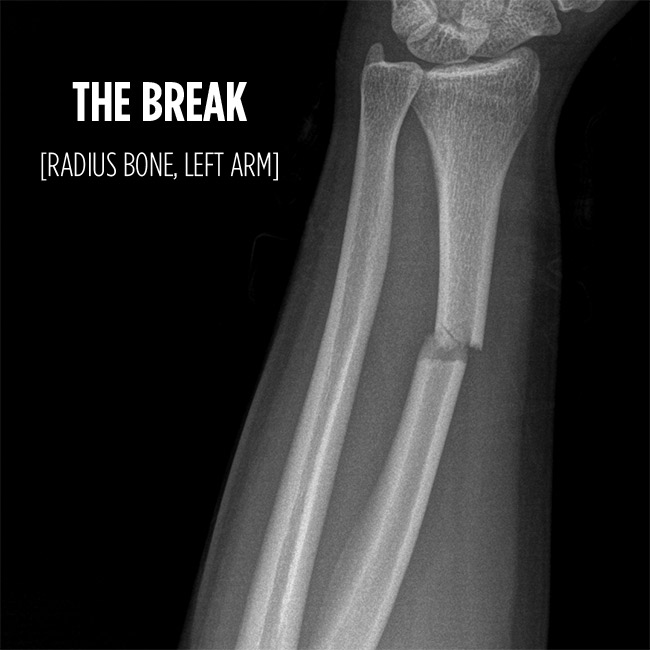
You never really notice it, but it’s happening all the time. Whether you just had a killer workout at the gym or just broke your arm after falling, your body is always working to keep your muscles and bones in tip top shape. But sometimes the damage is a little too much for the body to handle alone, so it needs some help from a doctor. When I broke my arm in eighth grade playing basketball, I found it fascinating that it could go from snapped in half to completely healed in a matter of weeks with the help of a simple cast! I would think that something as hard and as sturdy as a bone would much longer to heal, wouldn’t you? This is just a testament to the amazing things that the human body is capable of.
My name is Michael Shaak and I am a biology major at the University of Miami. I hope to one day go onto medical school and eventually specialize in Orthopedic Surgery. Some people ask me why I would want to forgo so much of the college experience in order to study so much for pre-med. Well, the short answer is, I don’t. Even with all my studies and homework, I still have enough time to rush a social fraternity this semester. And while it will definitely be very busy and will get super stressful, I still think it’s worth it. But why pre-med? To be honest, I don’t think I could see myself doing something like an office job. Ever since I was in eighth grade I’ve been fascinated by the human body and how it works, and I’ve known that I’ve wanted to be a surgeon.
On that note, this blog will be focusing on the human body and how it works, more specifically, the musculoskeletal system. This system is made up of your bones, muscles, and ligaments. The muscles are what makes you move, the bones keep you from being a blob of jelly on the ground, and the ligaments hold the two together. As you can imagine, there are a lot of moving parts that can easily be damaged or even broken, especially when you’re participating in physical activity. Some of the most common injuries in sports are things like ACL tears, groin and hamstring strains, and ankle sprains. All of these injuries require different types of expertise to treat, and that’s where the orthopedic surgeons come in. Besides specializing in orthopedic surgery, these doctors go even further and specialize in certain areas of the body. Whether it’s your hand, hip, foot, or knee, these guys and gals will know just the right way to fix you up.
I hope that you’ll stick with me throughout my research of the human body and orthopedics. As this blog ages, I plan to improve my writing style and develop better research skills that will help me throughout my future. Thanks for reading my first post and I’ll see your next time!
Thanks for joining me!
Good company in a journey makes the way seem shorter. — Izaak Walton


